
What is Verbal Behavior Therapy?

Verbal Behavior Therapy is a vital tool for helping those with autism improve their communication skills. Learn more about this approach to teaching communication and the benefits it offers children with autism. 

Understanding VBT and Its Impact

Communication is the foundation of human interaction, enabling us to connect, share ideas, resolve conflicts, and collaborate with others in our daily lives. However, communication can present distinct challenges for children with autism for a number of reasons, from neurological differences to sensory sensitivities and social factors.  

Verbal Behavioral Therapy (VBT), sometimes called applied verbal behavior therapy, is an evidence-based approach rooted in the principles of Applied Behavior Analysis (ABA). The ABA verbal behavior approach sees verbal communication as a learned behavior and focuses specifically on teaching and improving a person’s verbal communication skills. It is a practice aimed at helping people who struggle in this area to develop their functional language and communication skills. 

At Lighthouse Autism Center, we use the Verbal Behavioral (VB) branch of ABA to teach children with autism essential communication and language skills. We focus on why we use language, the purpose of words, and how children with autism can use their words to communicate their needs, wants, and ideas in a meaningful and effective way.  

VBT is derived from the same philosophy of behaviorism that underpins ABA. It employs basic scientific methodologies to develop socially and educationally significant behaviors. VBT emphasizes the use of language within environmental contexts and verbal communities so that the learned communication skills are both functional and contextually relevant. 

How Does Verbal Behavior Therapy Work?

VBT uses different types of verbal behavior (called verbal operants) that reflect how we naturally use VBT uses different types of verbal behavior (called verbal operants) that reflect how we naturally use language every day to support communication growth in children with autism. It breaks language into specific uses and focuses on how these can be applied in everyday routines, helping these children understand both the purpose and function of communication. Some of these operants include: 

  • Mand: When a person or child uses language to make a request. For example, if the child is thirsty, they will say “water” and receive a glass of water to drink. 
  • Tact: When a person or child labels something in the environment. For example, the child may see a glass filled with water and then say, “Water.”  
  • Intraverbal: When a person or child is able to respond to a question. For example, when a teacher asks, “Would you like a glass of water to drink?” and the child responds, “Yes.” 
  • Echoic: When a person or child repeats what another person said. For example, when a teacher says “water,” and the child repeats the word “water.” 

Together, these different operants help create a strong foundation for expressive and receptive language. They demonstrate how VBT breaks down communication into functional units. So, when a child masters these different types of verbal behavior, they will be better able to understand and use language in meaningful ways. This structured approach often complements other therapies, such as speech therapy for autism, to strengthen expressive and receptive language. 

The History of Verbal Behavior Therapy

The research and practices of VBT are based on the book “Verbal Behavior,” published in 1957 by the very influential behaviorist B.F. Skinner. Skinner is recognized for developing operant conditioning, the concept that behaviors are more likely to continue if they are rewarded and less likely to continue if they are discouraged or punished.  

VBT builds on this idea but goes beyond simple behavior and response. It looks at how language is shaped not only by the environment but also by the people involved in the interaction. In VBT, both the speaker and the listener play important roles, along with the setting where communication happens.  

This approach is different from language theories that focus on what happens inside the brain or body. Instead, VBT emphasizes how environmental factors influence why and how language is used.  

Importantly, VBT doesn’t only apply to spoken words. It also includes nonverbal ways of communicating (like gestures, eye contact, or pointing) that make it a flexible approach that fits into many real-life situations. Rather than focusing on grammar or sentence structure, VBT emphasizes how language functions and fits into everyday interactions and is about helping children use language in meaningful, everyday ways. 

This practical focus makes VBT especially useful in real-world settings, where communication often involves more than just words. It supports a wide range of expression, helping children with autism connect with others in ways that are meaningful and relevant to their daily lives. 

To deliver this kind of targeted support, many behavior analysts, therapists, and educators choose to pursue verbal behavior therapy certification. While not always required for employment, depending on the position, certification can enhance a professional’s ability to apply VBT strategies effectively and ensure they’re using research-based methods tailored to each child’s needs. 

The Pros of VBT

Many practitioners utilize ABA verbal behavior therapy as an approach to developing communication skills in children with autism. By breaking language into teachable units, VBT supports personalized instruction and often works in tandem with interventions that address social skills deficits in autistic children. There are a number of benefits to VBT as a part of the broader framework of ABA. Some of the main pros of VBT include: 

  1. Enhances analysis of how we learn to speak in a natural environment. Language acquisition can be natural, but should not be confused with being innate. 
  1. Allows language to be broken down into small sections for in-depth analysis. 
  1. With the analysis, specific instructional sequences can be systematically developed for an individual with autism. 
  1. When learning issues occur, the analysis allows us to pinpoint possible sources. 
  1. Allows for individualized instructional strategies based on what the individual needs. 
  1. Helps create intensive and systematic intervention plans for those who have difficulties with communication and/or intellectual disabilities. 
  1. Intervention plans for individuals with difficulties with language and/or disabilities can be incorporated into natural and artificial settings. 
  1. Encourages continued research by offering clearly defined methods, helping therapists better understand which communication strategies are most effective for each child. 
Together, we can unlock your child’s potential

What Is a Co-Treatment Therapy Session?

Explore co-treatment with ABA therapy with speech support for comprehensive care, improved communication, and effective outcomes in children. 

What Is a Co-Treatment Session and How Does It Benefit Your Child?

ABA (Applied Behavior Analysis) therapy programs are designed by a Board Certified Behavior Analyst (BCBA) and implemented by a Registered Behavior Technician (RBT) to address behavior-related goals in autistic children. Traditional ABA therapy models are offered in a silo and are not often combined with other therapies, such as speech therapy. 

At Lighthouse Autism Center, we have designed and created the Lighthouse Fusion® ABA Therapy model, which focuses on integrating speech support goals throughout the ABA therapy day. It is a co-treatment model that has seen exceptional results in our learners. Our approach combines the expertise of multiple professionals to establish goals, track progress and collaborate in session(s) to maximize therapeutic benefit and improve carryover across environments so they can use the skills they learn at home, at school, and in other everyday settings. 

So, what is collaborative treatment, and how can the Lighthouse Fusion ABA Therapy model benefit your child? Let’s take a look.  

What Is Co-Treatment?

As mentioned, often various therapy modalities (such as speech therapy and ABA therapy) are implemented in separate appointments, with separate goals and skills practice, for children with autism. However, many children diagnosed with Autism Spectrum Disorder (ASD) can benefit from collaboration between therapy modalities, in order to increase speed to progress across a wide variety of developmental areas.  

Children with autism may experience developmental delays or barriers to speech. Instead of focusing on either ABA therapy or speech therapy in a single session, we use a one-of-a-kind treatment approach that involves ABA and speech therapy in collaboration and combination. 

Every co-treatment session is attended by a BCBA, RBT, and an SLP (Speech Language Pathologist), who collaborate to develop a learning plan that will maximize goal attainment throughout the ABA therapy day. Co-treat sessions allow for collaboration on the Learner’s goals and challenges and ensure the RBT is prepared to reinforce the goals on a proactive basis throughout the implementation of the learning plan. 

For example, a BCBA may address prompting strategies, while a speech therapist targets expressive language in the same activity. Following the co-treat session, the RBT understands both goals and how to continue to work with the child in those areas.

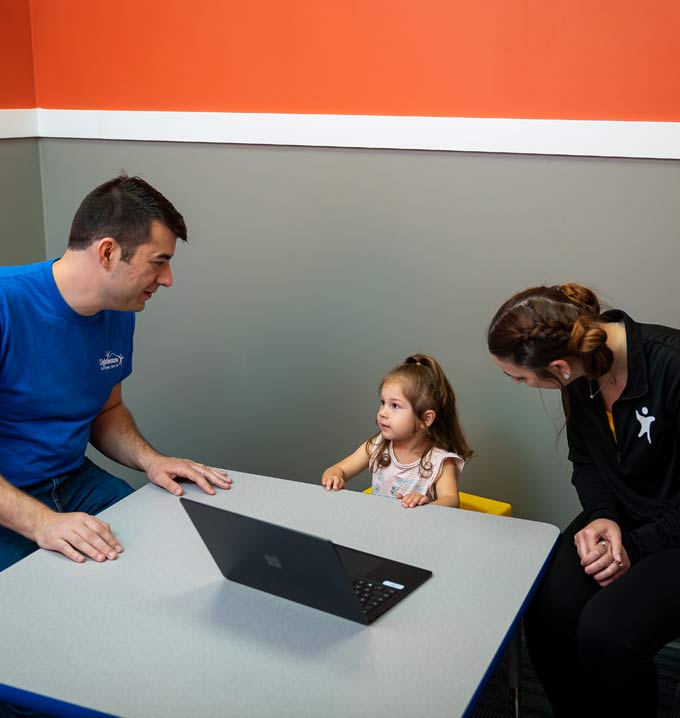
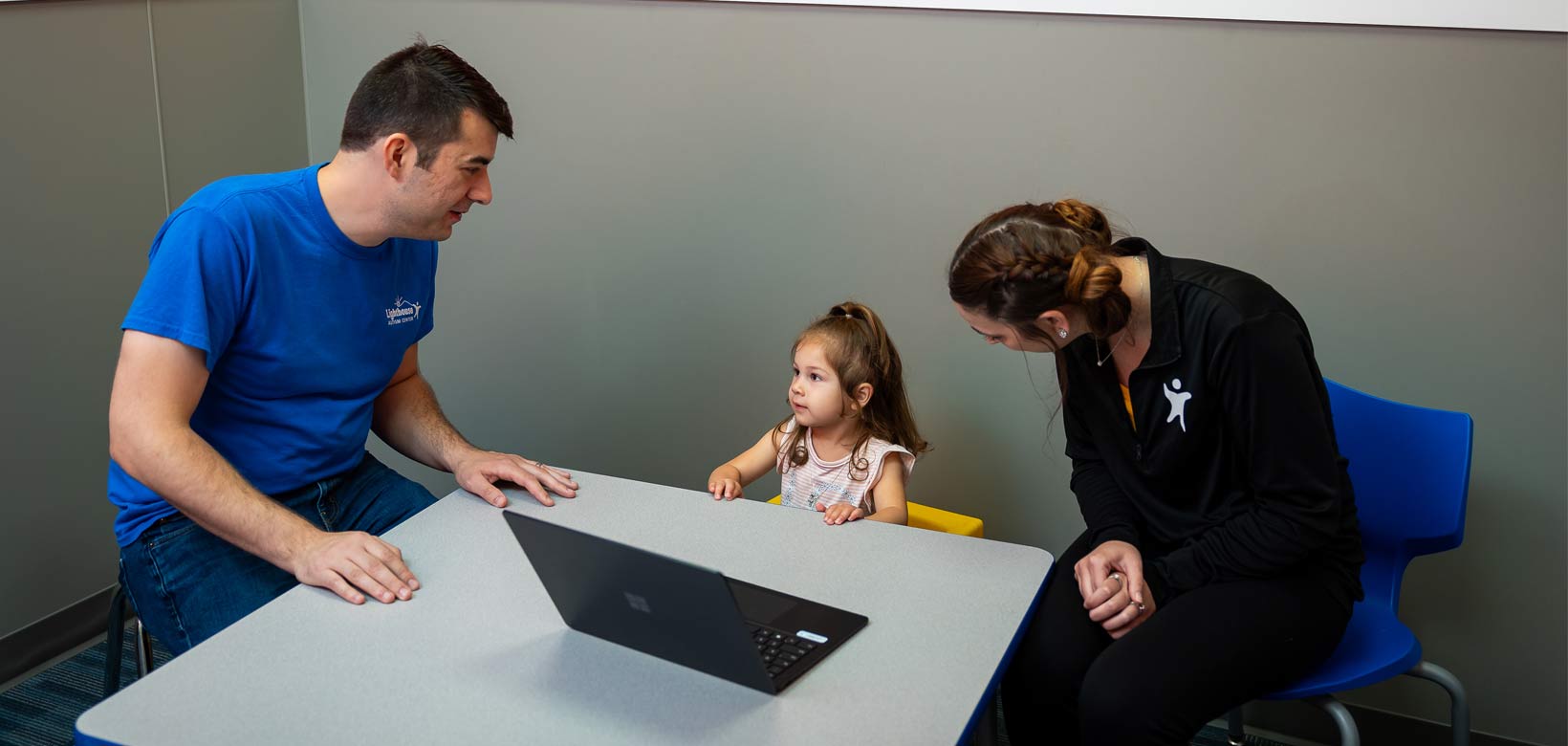
Two Lighthouse Autism Center Staff members sat at a table with a child and a laptop.

What Is the Whole Child Approach?

Traditionally, trained therapists worked on separate areas of development in different sessions; for instance, speech therapists focus only on speech. However, the whole child approach challenges this separation of therapy and instead focuses on investigating and addressing all the areas that impact children with autism as a whole. 

This includes but isn’t limited to behavior, sensory and motor skills, communication, emotional regulation, and more. It’s a collaborative therapy approach that looks at  intervention in a “whole child” manner rather than focusing on a few separate issues. It allows therapy teams to share insights in real time, adapt strategies on the spot, and ensure that treatment goals support overall functioning instead of just isolated skills. 

How Co-Treatment at LAC Can Benefit Your Child

At Lighthouse Autism Center, we have seen some incredible results through our Lighthouse Fusion ABA Therapy model. Here is how it can benefit your child.  

Addresses Multiple Needs Simultaneously

One of the main benefits of this multi-disciplinary approach is that it addresses a number of different needs and goals in single sessions. In traditional approaches, learners may only get 30 minutes of speech therapy a week, requiring them to leave an ABA program or classroom setting. With co-treatment, learners can work on their speech and communication skills while addressing other ABA-based outcomes. Speech prompts and cues are incorporated into sessions, which expose children to more speech therapy than they would normally get in a traditional therapy model.  

Keeps Children Stimulated Throughout a Session

Many children with autism struggle to sit through a dedicated speech or OT therapy session and are more likely to respond to sensory or motor activity sessions. They simply find these activities more stimulating. 

Co-treatment allows children to get adequate exposure to speech therapy during their sessions by breaking up motor activity or sensory lessons with small speech and communication treatments within the session. Therapists can also adjust pacing and transitions collaboratively to match the child’s attention span and engagement needs. 

Better Communication Between Therapists

As with any therapy, collaboration is key for the best outcome. Because the therapists working to support Lighthouse Fusion ABA Therapy are on staff and present during your child’s session, they can work together to identify where your child is thriving and where they might need to do more work in real time. Together, this collaboration tends to be more effective for your child’s progression.  

Therapists who are collaborating will be able to design and provide a more coordinated, comprehensive treatment plan to reach your child’s goals. They also gain a deeper understanding of each other’s methods and goals, which leads to more cohesive care across disciplines. 

Creates a Generalized Learning Environment

Many children with autism can be averse to deviations from their own daily routines, which may translate for example into a child reserving communication skills practice for their speech therapy sessions while working on their other skills during ABA therapy. This can make it difficult to implement their skills in real-life situations.  

Co-treatment creates a generalized environment for your child where they are encouraged to use a variety of skills that they are learning in different contexts. This improves their ability to translate the use of new skills across a range of environments.  

They Learn While Having Fun

The best thing about the co-treatment model at Lighthouse Autism Center is that we see our learners making exceptional progress toward skill and goal attainment, all while playing and having fun in a natural learning environment.  

At LAC, our learners get to explore their interests naturally, have exciting sensory experiences, and practice language through learner-directed play. We know children learn best when they are having fun.  

Get the Best for Your Child with LAC

We have a strong belief that collaborative therapeutic work through Lighthouse Fusion ™ ABA Therapy delivers strong results for our learners.  

Together, we can unlock your child’s potential

Safety & Autism Centers

Safety & Autism Centers: How LAC Prioritizes Safety

As a parent, trusting anyone with the safety of your child is a big ask, even more so when you know that your child sees, feels, and experiences the world differently. At Lighthouse Autism Center, we understand that safety means more than locked doors or clean playrooms. It means trust. It means creating an environment where your child is not only protected but truly seen, understood, and supported. 

From the moment you step into one of our centers, we want you to feel what we’ve built: a space where clinical excellence meets compassionate care and where every safety decision, big or small, is guided by a simple belief — your child deserves nothing less than a place where they can thrive with confidence and joy. 

Why Safety Awareness Matters in Autism Centers

When you’re exploring options for what ABA therapy center to send your child to, the curriculum and credentials are just one part of the process. The other is trust; finding a center that you trust will not only provide your child with the education and care they need but also do so in a manner that makes them feel emotionally and physically safe.  

Trust starts with safety. Children on the autism spectrum may interpret risk differently or struggle to communicate their discomfort, which is why proactive safety awareness is essential in every part of the care environment. There are also the added challenges that children with autism experience that can make traditional safety protocols insufficient or ineffective. Things like elopement risks, sensory sensitivities, and communication differences mean that autism centers must go beyond standard practices to truly create safe spaces. 

Awareness is the first step. When autism centers deeply understand the unique safety needs of their learners, they can design predictable and calming spaces, teach safety in ways that resonate, and respond to crises with precision and empathy. 

The safety of an autism center is crucial. It shapes how rooms are designed, how teams are trained, and how children are supported through unfamiliar or challenging experiences. A truly effective ABA provider should be prepared for a handful of risks that can keep parents up at night. Knowing these autism and safety concerns helps you ask sharper questions on a tour and feel more confident about the setting your child enters each day. 

Key Safety Concerns Caregivers Should Understand

Every child is unique, but there are common areas of concern that many caregivers of children with autism face. Understanding these helps families take preventive steps and work more collaboratively with therapy providers. 

Wandering and elopement: Many children with autism are prone to bolting from safe areas, whether due to curiosity, stress, or a search for sensory input. The worry isn’t just a child stepping into the hallway; it’s the terrifying chance they might slip out a door before anyone notices. It’s one of the most talked-about aspects of autism risk and safety management because the stakes are so high. So it’s important to make sure the center you’re looking at has stringent elopement prevention measures in place.  

Home safety challenges: From everyday items like cleaning supplies to sensory-seeking behaviors like climbing, some risks can be hidden in plain sight. That’s why we often share practical advice on child-proofing a child with autism’s home to reduce stress and increase independence. 

Overstimulation: Even in structured settings like therapeutic environments and ABA centers, sensory input can still become overwhelming for children with autism. Bright lighting, certain sounds, or crowded spaces may impact a child’s ability to stay regulated and focused. This brings the risk of meltdowns, shutdowns, or even self-injury if the environment isn’t tuned to a child’s sensory profile. 

Stressful transitions between activities: Moving from circle time to a motor-skills room or leaving their favorite toy behind can spark confusion or aggression. Families want reassurance that staff understand how hard sudden changes can be and have strategies to ease these situations. 

Interactions with peers and shared equipment: Group activities build social skills, yet parents still worry about accidental pushes, bites, or the misuse of therapy materials. Gentle but consistent supervision is essential for autism and safety awareness in mixed-age rooms. 

Online risks: The digital world offers plenty of benefits, but there are also some serious concerns surrounding internet safety and autism. For children with autism, who may take things literally or struggle with social nuance, internet safety is especially important. From screen-time boundaries to safe browsing tools, caregivers play a key role in helping kids navigate online spaces. 

Medical or behavioral emergencies: Seizures, severe allergies, or intense self-harm behaviors can occur without warning. Caregivers need to know that staff recognize warning signs early and can act fast while keeping other children calm. 

Emergency preparedness: Fire drills, severe weather, or medical events can be distressing for any child, but particularly for those with limited verbal communication or high anxiety. Practicing routines and creating visual guides help build preparedness and reduce fear during real emergencies. 

Security and Safety Precautions at Lighthouse Autism Center

One of the most important criteria for choosing an autism therapy center is safety. When working with children with autism, safety is of paramount importance. At Lighthouse Autism Center, we are committed to providing the utmost security for your child, ensuring a safe and educational environment. 

There are several safety precautions taken in order to ensure the safety of your child. These include: 

Doors: Lighthouse Autism Center has safety mechanisms and a safety plan for every external door; which may include locks, alarms, and delayed unlocking systems, based on what each state regulation allows. Learners are always paired 1:1 with a professional on our team, so they are highly supervised every minute of the day when they are with Lighthouse Autism Center. Every single external door in each center is locked. This means that if a child tries to “elope” or run, they cannot exit the building. Each door has a button above the door that must be pressed in order to exit the building. In the six years the centers have been open, no child has ever eloped from one of our buildings. Furthermore, the doors are also locked from the outside, meaning that the only way an individual (besides staff members and parents who have key fobs) can enter the center is for someone inside the building to let them in. 

Staff: All staff members undergo multiple interviews, reference checks, and background checks before being offered a position with the center. 

Training: Each direct care staff member receives two weeks of training before commencing therapy with a child, and BCBAs who are new to Lighthouse spend about 4 weeks learning the “Lighthouse way” of ABA programming. The center also provides certification training for each therapist in CPR and Crisis Prevention Intervention (CPI). 

Emergency protocols: Each center has emergency protocols for severe weather, fires, and lockdowns. Several times throughout the year, emergency drills are issued to ensure staff members and children know how to react in an emergency situation. 

Beyond the Center: Autism and Safety in the Community or at Home

The best safety practices follow a child wherever they go. That’s why Lighthouse focuses on generalization, helping children apply what they’ve learned across different environments. 

We work with families to: 

  • Develop routines that build predictability at home. 
  • Prepare children for outings using visual schedules and social stories. 
  • Create calm-down kits for overstimulating settings. 

We also help caregivers teach safety skills directly, like understanding stop signs, waiting in line, or recognizing when to ask for help, all in a way that’s accessible and engaging for the child. From family walks to playground visits, our goal is to help every child feel more secure in the world around them and to help families feel confident supporting them in those spaces. 

Take the Next Step Toward Confident, Safe Growth

There are many important considerations when selecting an ABA center, but safety should always be near the top of the list. We encourage families to ask detailed questions about staff training, emergency readiness, child supervision, and how safety is integrated into therapy planning. 

At Lighthouse Autism Center, safety is a shared commitment between our team and the families we serve. Whether you’re just beginning your autism journey or looking to transition into ABA therapy, we’re here to answer your questions, walk you through our spaces, and support your child’s next steps.  

Find a Center Near You

Interested in finding an autism center near you? Click Find a Center below to view a full list of current autism therapy centers.

Translate »