
ABA Therapy Tips for Taking Your Autistic Child to the Dentist

Taking Your Autistic Child to the Dentist

For any child, and even adults, a trip to the dentist can often be filled with anxiety, fear, and discomfort. For a autistic child, especially, these feelings can be even further heightened by sensitivities to noise, smell, and touch. To make this experience better for both the child and family, Lighthouse Autism Center has compiled a list of ABA therapy tips to make taking your child to the dentist just a little bit easier.

Dental Care for Autistic Children: Making Dentist Visits a Bit Easier

With a little planning and patience, you can help your child feel more at ease before, during, and after a dentist visit. Below is a list of autism tips for caregivers that are commonly used during ABA therapy and may help your child during their next trip to the dentist.

Tip 1 – Prepare Your Child for the Visit

A little girl smiling and brushing her teeth.

Start talking about the dentist visit several days, or even weeks, in advance. It’s recommended that you use calm, simple language to explain what will happen. 

For example, you might say, “We’re going to visit a place where someone helps us take care of our teeth. You will sit in a chair. A nice man or woman will ask you to open your mouth so they can look at and touch your teeth. They want to make sure that your teeth are nice and healthy!”

Visual supports, like pictures or short videos of a dentist’s office, can also be helpful. These are simple ways to help children know what to expect and reduce anxiety about the unknown.

Tip 2 – Consider Visiting the Dentist Before Your Appointment
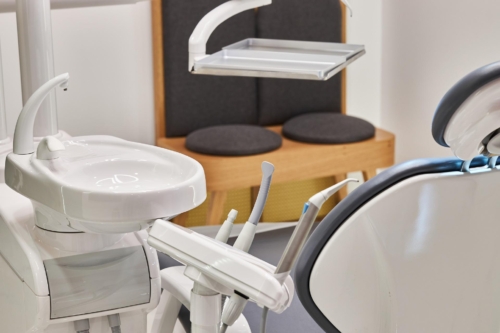
A photograph of a dentist’s chair inside the consultation room.

If your dental office allows it, ask about scheduling a short visit before the actual appointment. Walk your child through the waiting room, show them the chair, and say hello to the staff. This helps your child get used to the sights, sounds, and routine in a low-pressure way. The more your child is exposed to the space, the more comfortable they will become.

Tip 3 – Bring Familiar, Calming Items

A photograph of a dentist cleaning the teeth of a young boy wearing sunglasses.

For the visit, it may be useful to bring items that help your child feel calm and secure, like a favorite toy, a tablet with relaxing music, or a small weighted blanket. Noise-canceling headphones and sunglasses can also help with bright lights or unfamiliar sounds. 

Tip 4 – Practice at Home

Create “pretend dentist” time at home. Use a mirror and toothbrush to gently mimic the steps of a dental visit. To make it playful and fun, you can take turns being the patient and the dentist. Practicing these steps helps your child feel more prepared for what will happen at the appointment.

Tip 5 – Be Flexible and Follow Your Child’s Lead
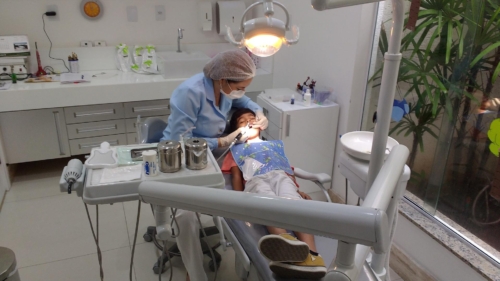
A wide-angle photograph of a dental appointment in progress, showing the dentist, the patient, and the consultation room with trees outside the window.

A trip to the dentist can be challenging for anyone. If your child begins to experience difficulty at the visit, or is visibly frustrated, scared, or uncomfortable, understand that they simply may not be ready or able to complete the visit that day, and that’s ok. You, as a parent or caregiver, know your child best.

Tip 6 – Choose the Right Time of Day

Try to schedule the appointment at a time when your child is usually well-rested and calm.

Some families find that mid-morning or early afternoon works best. Avoid scheduling visits right after school or during times your child may be tired or overstimulated.

Tip 7 – Celebrate the Little Wins

Use lots of praise and encouragement throughout the visit, even for small successes like walking into the office or sitting in the chair.

If your child uses a reward system, you can offer them something they enjoy after the appointment. Positive reinforcement can help build confidence and make future visits a little easier.

Tip 8 – Build Dental Care Into Your Daily Routine

Helping your child get used to brushing and oral hygiene at home can make dental visits smoother.

Start with short, gentle routines. You could use a timer, turn it into a song, or let your child choose their toothbrush. An ABA therapist can also help create a personalized plan to practice these steps over time.

Tip 9 – Look for an Autism-Friendly Dentist

Choosing a dentist who has experience with children on the autism spectrum can make all the difference.

Ask if they’re open to sensory accommodations, visual supports, or longer appointment windows. Finding an autism-friendly pediatric dentist can help create a space where your child can feel safe and understood.

Tip 10 – Consider Asking a Therapist To Attend the Visit

For those children who receive ABA therapy, some centers, like Lighthouse Autism Center, will send a therapist to help your family and child during the dental visit. They can be a helpful resource for you and your child by applying ABA therapy techniques.

We’re Here To Support You

Every child’s journey is unique, and that’s okay. Whether you’re preparing for your first visit to the dentist or looking for new ways to support your child through daily life, know that you’re not alone.

At Lighthouse Autism Center, we’re here to walk alongside families like yours every step of the way.

Together, we can unlock your child’s potential

Tips for House Hunting with Your Child on the Spectrum

Guidance for Families with Children with Autism when Moving

Moving is always a stressful and complicated endeavor. But when you have a child on the autism spectrum, the thought of packing up your household and moving somewhere new can seem like a near-impossible task. Parents often worry that their children will get overwhelmed by this major transition, and rightfully so. Autistic children thrive on routine and stability — everything that moving disrupts.

child and parents moving to new house

That’s why we’ve compiled a list of supportive tips to help you keep your child’s comfort and well-being front and center, while still managing the practical tasks of moving with an autistic child.

Establish Your Home-Buying Budget

Before starting the search for your dream home, it’s important to take time to create a clear home-buying budget. Raising an autistic child can pose a significant financial challenge for parents, even with the help of Supplemental Security Income (SSI) benefits. It isn’t easy to manage the costs of equipment, supplies, medication, childcare, education, and therapy services. 

Knowing your financial boundaries eases stress and lets you focus on homes that truly fit your needs. So, you need to think carefully about what your budget is and if you’re prepared to handle the additional expenses involved in buying a new home, selling your existing property, and moving.

Redfin recommends creating a realistic home-buying budget before you start looking at properties. Calculate how much of a mortgage you can afford by adding up your ongoing expenses and subtracting these from your household income to find out what’s realistic. The rule of thumb is to keep your housing costs less than 28% of your before-tax income. Once you have a better idea of your home affordability, research home prices in your area to find out what kinds of homes you can afford on your budget.

Look for Autism-Friendly Home Features

When you’re ready to start looking at homes, get in touch with a local real estate agent who can help you scout properties that will best fit your family. Keep an eye out for features that may appeal to your child and your family’s lifestyle. 

Some of the features that help reduce sensory stress and promote safety include:

  • Double‑pane windows to dampen outdoor noise
  • A fenced (and secure) backyard
  • Quiet, low‑traffic street
  • Spaces you can adapt for sensory play or calming zones
  • Minimal kitchen layout to reduce visual clutter
  • Soft lighting or the ability to install dimmer switches

These practical, autism‑friendly home features support your child’s comfort and daily routine.

Making a Moving Day Plan

Moving day will always feel a little overwhelming, no matter how much planning you do. But a few practical autism tips for caregivers can help you control some of that chaos. For example, you could help keep your child calm and content amid the mayhem by giving them your full attention. One way to ensure your child receives the necessary attention while your possessions reach your new home safely is by hiring professional movers. Some movers even offer activity packs for children, so be sure to ask about this when you call for quotes. When you arrive in your new home, unpack your child’s room first so they can start regaining some sense of normalcy right away.

Keep Your Child in the Loop

The most important thing to remember as you prepare for your upcoming move is to keep your child in the loop. Autistic children feel more comfortable when they know what to expect. Parents.com recommends broaching the subject early so your kid has plenty of time to process the idea of moving. Highlight some things that your child can get excited about, like a bigger bedroom or backyard where they can play. Help your child visualize the days leading up to your move by writing down everything on a dedicated moving calendar. 

On moving day, you can then help your child settle in smoothly by unpacking their room first. If you arrange familiar furniture and objects in familiar places, it can help to recreate their previous environment, easing the adjustment and supporting continuity.

Remember: continuous communication is key. Review your moving schedule every day, read children’s books about moving, and offer plenty of positive reinforcement when your child makes it through a day that deviates from their normal routine.

While autistic children often rely on predictability and consistency, when it comes to moving, things rarely go smoothly — and that’s okay. Be prepared to go with the flow and respond to issues as they arise. Monitoring your child for signs of stress and anxiety is vital. Do what you can to prepare ahead so you can focus all your attention on your child before, during, and after your move.

Know When To Ask for Help

Moving with a child on the autism spectrum can be a big undertaking. But, with thoughtful planning, compassion, and flexible pacing, it can also be a chance to build strength and resilience. By prioritizing your child’s comfort, providing visual supports and routines, and taking it one step at a time, you can help your family begin a positive new chapter together.
During this process, remember: moving takes a village. Reach out to LAC for support if your child needs extra planning, emotional preparation, or help rebuilding routines. You can also involve teachers, therapists, caregivers, or trusted family members to share in helping your child through this transition. Contact us to find out more autism tips for parents.

Together, we can unlock your child’s potential

Interested in learning more about therapy resources that can assist your child with autism?

Special Needs Bikes, Trikes and Trailers: Enjoying Bike Riding with Your Child

Special Needs Bikes, Trikes and Trailers: Enjoying Bike Riding with Your Child

It is that time of year when things start to heat up, and everyone begins looking for fun activities to do outdoors. A favorite pastime for many families in search of fun and connection in the fresh air is bike riding. For children with autism and other special needs, though, bike riding doesn’t come easily as it may for others. Having to coordinate steering, pedaling, and balancing is often a difficult task for most children to begin with. Children with Down syndrome, cerebral palsy, spina bifida, autism spectrum disorder, or other similar conditions may never be able to ride a two-wheeler on their own. But that doesn’t mean a fun outdoor ride is out of reach.

A List of Bikes for Autistic Children to Enjoy

Adaptive bikes, trikes, and trailers can allow you and your child to enjoy bike riding together. There are a number of really good options out there; the key is finding the solution that works best for you and your child. While Lighthouse Autism Center doesn’t endorse any one particular brand or device over another, here are a few that we thought might be helpful based on reviews. These range in price and go from just over a hundred dollars for early riders to upwards of $5,000 for fully customized adaptive cycles.

Buddy Bikes

Buddy Bikes are modified tandem bicycles designed to accommodate riders with special needs, making them a great choice for anyone looking to purchase bikes for autistic kids. Unlike traditional tandem bikes, where the driver sits in front, Buddy Bikes position the driver at the back, while the other rider (your child) sits in a lower seat up front, allowing for better supervision, communication, and shared control. This configuration is especially helpful for riders with autism or mobility challenges who benefit from additional support and stability. 

Unfortunately, Buddy Bikes isn’t producing any new inventory in 2025, but this may change in the future. They have a range of pre-owned trade-in models, and you can join a waiting list to keep up to date, or you may be able to find them at other retail or online stores. They’re recommended for riders aged four and older (depending on the model), with multiple sizing and customization options available to accommodate individual needs.

Bike Trailers

For children who aren’t able to ride independently, special needs trailer bikes offer a safe and inclusive way to enjoy outdoor adventures with family. Whether pulled by a parent or older sibling, these adaptive trailers provide comfort, security, and flexibility for riders with autism and other developmental needs.

Burley Trailers

Burley.com offers a wide range of trailers that attach to an adult bike, depending on the type of biking you do. One model that is popular among riders, and has been modified and updated over the years, is the Honey Bee, a double-capacity trailer that easily converts into a stroller. It features a 100-lb weight limit, UV-protective windows, and a 5-point harness system, making it a reliable choice for families seeking versatility and safety. The 2025 model retails for around $500.

Wike Trailers

Wike Special Needs Trailers (formerly known as Wicycle) are thoughtfully designed to accommodate older or larger children. The Large Special Needs Trailer fits riders up to 5’4″ and 125 lbs, and includes conversion kits for stroller and jogger use. Features like a retractable canopy, 5-point harness, and impact protection offer caregivers comfort and peace of mind. 

For those needing even more room and support, the Extra-Large Special Needs Trailer accommodates individuals up to 5’10” and 200 lbs. It comes equipped with roll-up windows, dual-mode braking, and a reinforced aluminum frame for enhanced safety and durability. Pricing ranges from approximately $1,499 to $1,999, depending on the model you choose.

Zigo Carrier Bicycles

The Zigo Leader X2 Carrier Bicycle offers a modular and inclusive cycling experience for families looking beyond traditional trailers. Modeled after the Dutch Cargo Bike, it features a front-mounted ChildPod that seats one or two children, allowing direct visibility and easier communication, which is especially valuable for children with autism or sensory sensitivities. The system quickly converts into a stroller, jogger, trailer, or standalone bike using its patented LeaderLink System. Safety features include padded 5-point harnesses, a sun-protective canopy, and drum brakes for controlled stopping. With ADA-compliant dimensions and fold-flat portability, it’s designed with accessibility in mind. Pricing for the current model ranges from $1,200 to $1,700, depending on configuration and accessories.

Freedom Concepts Inc.

With Freedom Concepts Inc., every adaptive bicycle they build is designed for mobility, therapy, recreation, fun, and freedom. Their adaptive bikes are built through the feedback received from parents, riders, consumers, and therapists in the medical industry. Each Freedom Concepts model is thoughtfully designed to accommodate the needs of individuals with physical, cognitive, and developmental disabilities. 

Their product line includes upright tricycles, semi-recumbents, tandems, and handcycles,  each tailored to the rider’s unique specifications through adjustable seating, footplates, and headrests. Popular series, such as Discovery (for young children), Adventurer (for teens and adults), and Odyssey (semi-recumbent for GMFCS levels 1–3), offer therapeutic benefits while promoting independence, mobility, and recreation. Pricing varies, depending on model and customization.

Worksman Cycles

Worksman Cycles has been manufacturing bicycles in the U.S. since 1898, offering safe, stable, and stylish mobility solutions for riders of all abilities. Their special needs trikes support motor skill development, endurance, and inclusive play, making them ideal for children with autism and other developmental needs. Models like the Micah Flagship Deluxe and Developmental Youth Trike feature caregiver steering, adjustable components, and platform pedals with heel support, all designed to promote independence and confidence. Worksman’s commitment to affordability ensures that families and clinicians can access high-quality adaptive cycles without inflated specialty pricing. Most models range from $549 to $2,699, with customization options available to meet individual therapeutic goals.

Adaptive Mall

Adaptive Mall offers a curated selection of adaptive tricycles, balance bikes, and hand-and-foot cycles for children and adults with mild to complex support needs. Their catalog includes therapist-recommended models from brands like Freedom Concepts, Rifton, and Triaid, each designed to promote mobility, coordination, and independence. Tricycles such as the Triaid Terrier and Rifton Large feature adjustable seating, postural support, and caregiver-assist steering options, making them ideal for riders with autism, cerebral palsy, or other developmental challenges. Pricing ranges from $1,500 to $7,400, depending on size and customization, and Adaptive Mall’s team provides personalized guidance to help families find the right fit for their child’s therapeutic and recreational goals.

Amazon’s Special Needs Bikes

To explore other models and brands for special needs tricycles, bikes, and trailers, shop for special needs bikes on Amazon

Learn More With Lighthouse Autism Center

Exploring adaptive bikes and trailers opens up new opportunities for families to connect, move, and create lasting memories. For more insights on autism-friendly activities and therapeutic support, visit the Lighthouse Autism Center blog.

Together, we can unlock your child’s potential

Lighthouse Autism Center Opens New Center in Monroe, Indiana!

ABA Therapy Center is Now Open in Monroe, North Carolina

Lighthouse Autism Center (LAC) is excited to announce the opening of a new center in Monroe, North Carolina, on August 11, 2025. This marks another important milestone in our continued expansion, which now spans multiple states and supports hundreds of families across the country. What started as a modest effort to help a few families has grown into a network of centers providing specialized autism services to communities in need.

Our Monroe center offers a wide range of services tailored to the individual needs of children with autism and their families. These services include ABA therapy, the innovative Lighthouse Fusion® ABA therapy approach to speech support, autism diagnostic testing, pre-academic learning programs, and more. Each of these services is designed to promote growth, learning, and independence for children on the autism spectrum.

New Monroe Autism Center to Support Families

We are thrilled to open our newest play-based ABA therapy center in Monroe, North Carolina. This center will provide families in the area with access to essential autism services, delivered in a welcoming and supportive environment. We look forward to becoming an integral part of the Monroe community, supporting families, and helping children with autism reach their full potential.

As we expand into Monroe, we’re proud to offer more than just top-notch therapy—we are also committed to contributing to the local economy by creating new job opportunities. This growth reflects our ongoing dedication to meeting the rising demand for autism services and making a positive impact in the communities we serve.

Lighthouse Autism Center: Leading the Way in Autism Therapy

Lighthouse Autism Center is a recognized leader in the field of autism therapy, known for its child-centered approach and dedication to providing high-quality, evidence-based treatment. Our state-of-the-art centers create a nurturing and dynamic learning environment, where children can thrive through play-based therapy.

One of the key features of our approach is Lighthouse Fusion® ABA therapy, a unique method that integrates speech support directly into a child’s daily ABA programming. This innovative model allows children to make faster progress in speech development, all while engaging in fun and meaningful activities. By blending speech therapy with ABA, Lighthouse Fusion provides more opportunities for speech practice and communication skills throughout the day, helping children unlock their potential more quickly.

We are excited to bring our proven model to Monroe, where we will offer a full spectrum of services, including ABA therapy, speech support, diagnostic testing, and parent support. Our expert team of clinicians is committed to providing compassionate care and ensuring that each child receives the support they need to grow, learn, and succeed.

To learn more about Lighthouse Autism Center in Monroe or to enroll your child, please contact our Family Outreach Coordinator or visit our website. We look forward to joining the Monroe community and making a lasting difference in the lives of children and families affected by autism.

Monroe Center Contact Information

216 N Charlotte Avenue
Monroe, North Carolina 28112

Family Outreach Phone: 704-803-4500

Don’t see an autism center listed near you? Contact us and let us know the area you are in, and we will notify you when we have a center opening near you!

Find a Center Near You

Interested in finding an autism center near you? Click Find a Center below to view a full list of current autism therapy centers.

Lighthouse Autism Center is Expanding with a New Center in Smithfield, North Carolina

Lighthouse Autism Center is opening a second location in Smithfield, North Carolina

Lighthouse Autism Center (LAC) is thrilled to announce the opening of our fourth location in North Carolina in the town of Smithfield, approximately 30 miles southeast of downtown Raleigh. Scheduled to open in October 2025, this new center reflects our commitment to expanding access to high-quality autism therapy services for families across the state of North Carolina.

Lighthouse Autism Center overlay ontop of an Autism Center building in the background

From our beginnings serving a small number of families to becoming a trusted name in autism care across multiple states, Lighthouse Autism Center has always prioritized growth with purpose. The addition of this location allows us to extend our reach and help even more children with autism thrive.

Our Smithfield center will offer the same comprehensive and innovative services that families have come to expect from Lighthouse Autism Center. These include:

  • Play-Based ABA Therapy: A child-centered approach that makes learning enjoyable and effective.
  • Lighthouse Fusion®: An innovative therapy model that integrates speech therapy directly into ABA programming, providing more opportunities for meaningful progress.
  • Diagnostic Testing: Comprehensive evaluations to ensure families receive accurate and timely diagnoses.
  • Pre-Academic Programs: Tailored activities designed to prepare children for success in educational settings.

Smithfield Autism Center: Leading the Way in Autism Therapy

Every aspect of our services is designed with individualized care in mind, ensuring that each child receives the tools and support they need to reach their full potential. By opening this new location, we aim to better serve the Smithfield community and provide more convenient access to life-changing autism therapy.

At Lighthouse Autism Center, we take pride in being a leader in autism care. Our team of compassionate professionals is dedicated to creating a nurturing environment where children can grow, learn, and thrive. Our unique Lighthouse Fusion® approach exemplifies our commitment to innovation by combining play-based ABA with speech therapy, enabling children to achieve greater progress in less time.

We are excited to bring these transformative services to the families of Lincoln Indian Village and surrounding communities. By collaborating closely with families and utilizing evidence-based practices, we strive to make a meaningful impact in the lives of children with autism.

Smithfield Center Contact Information

300 South 3rd Suite C

Smithfield, North Carolina 27577

(704) 803-4500

Don’t see an autism center listed near you? Contact us and let us know the area you are in, and we will notify you when we have a center opening near you!

Find a Center Near You

Interested in finding an autism center near you? Click Find a Center below to view a full list of current autism therapy centers.

Translate »