

New Hubs Established for Early Diagnosis of Autism
The earlier a child is diagnosed with autism or developmental delays, the sooner intervention services can start. It’s during this time of rapid brain growth and plasticity that it can help a child the most.
To increase the number of area children who would benefit from early intervention, the Indiana University School of Medicine formed a partnership with Riley Children’s Foundation. Together, they opened Early Evaluation services for autism spectrum disorder and developmental delay at six Indiana locations in South Bend, Lafayette, Bloomington, New Albany, Evansville, and Fort Wayne. Additional sites are planned for later this year.
The services they provided are part of the Neurodevelopmental and Behavioral System (NDBS), a model developed by faculty at the IU School of Medicine. This offers a solution to the need for high quality health care for children in Indiana with neurodevelopmental and behavioral disorders.
According to the Center for Disease Control and Prevention, about one in 68 children are diagnosed with autism in the United States – an overall increase of 30 percent from 2012. In Indiana, the average age of diagnosis is 5.3 years, but early screening with referral for evaluation and diagnosis can occur by age 18 months.
To meet this growing need, diagnostic services are now available for children who have been identified in early screenings as having concerns for developmental delay or autism. The criteria for evaluation appointments are:
- Child must be 18-42 months of age
- Child must have primary care physician
- Primary physician must identify concern based on standardized screening tools (often ASQ and/or MCHAT)
To read the entire Spring 2015 edition of The Autism Beacon click here.
Together, we can unlock your child’s potential
Related News

03/10/2026
What is Verbal Behavior Therapy?
Verbal Behavior Therapy is a vital tool for helping those with autism improve their communication skills. Learn more about this approach to teaching communication and the benefits it offers children with autism. Understanding VBT and Its Impact Communication is the foundation of human interaction, enabling us to connect, share ideas, resolve conflicts, and collaborate with others in […]
03/10/2026
What Is a Co-Treatment Therapy Session?
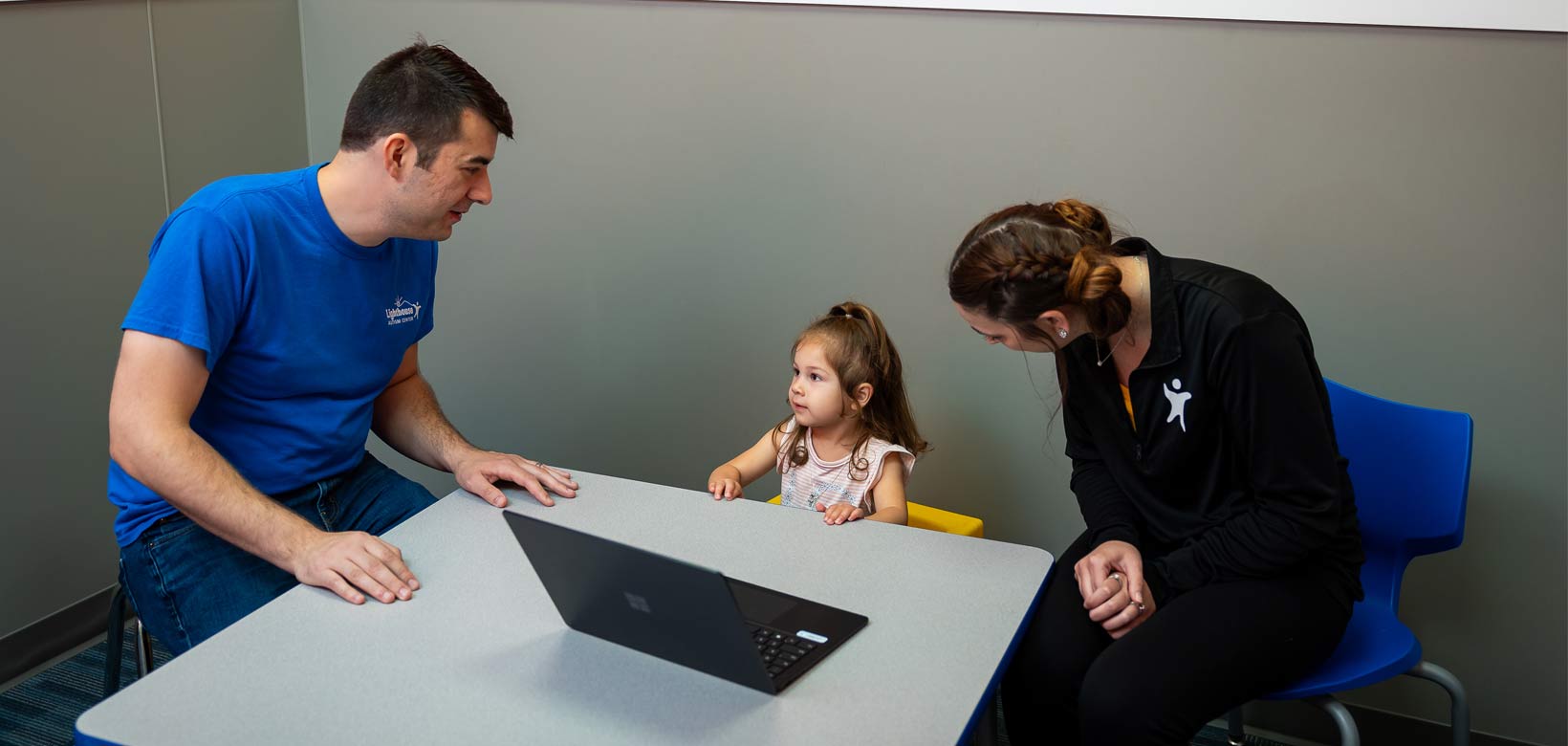
Explore co-treatment with ABA therapy with speech support for comprehensive care, improved communication, and effective outcomes in children. What Is a Co-Treatment Session and How Does It Benefit Your Child? ABA (Applied Behavior Analysis) therapy programs are designed by a Board Certified Behavior Analyst (BCBA) and implemented by a Registered Behavior Technician (RBT) to address behavior-related goals in autistic children. […]
03/10/2026
Safety & Autism Centers
Safety & Autism Centers: How LAC Prioritizes Safety As a parent, trusting anyone with the safety of your child is a big ask, even more so when you know that your child sees, feels, and experiences the world differently. At Lighthouse Autism Center, we understand that safety means more than locked doors or clean playrooms. […]
